Which ticket or tour fits
| Type | Who | from | Note |
|---|---|---|---|
| DIY / standard | For travellers who value freedom and manage connections | Train, dynamic fare | Buy each transport component through official channels. |
| Priority-access tour | For reducing logistics and included queues | Train, dynamic fare | Skip-the-line applies only to explicitly listed inclusions. |
| Combination | For joining several stops or modes in one day | Train, dynamic fare | Check free time, admissions and the exact route. |
Build a realistic timetable
Treat Milano Centrale–Venezia Santa Lucia–Rialto–St Mark’s Square as a chain of appointments, not an open checklist. Leave early, identify two workable returns and protect thirty minutes at the end; a minor delay can spread across separate services.
Do not force Murano, Burano and every central landmark into the same day; choose one detour. Put the non-negotiable stop first and make everything else conditional. If you fall behind, remove a detour instead of compressing lunch, transfers and the journey home.
- Recheck official times the previous evening and morning.
- Store tickets and meeting details offline.
- Choose the latest departure you will genuinely use.
Schedules and fares: Trenitalia. City transport: ACTV (official websites).
Protect useful time
Count door-to-door time, including the hotel-to-station trip. Add queues, controls, orientation and one genuine break: commercial durations do not always expose those minutes.
Avoid a non-refundable commitment immediately after reaching Milan. A buffer is not wasted time; it absorbs a platform change, queue or missed connection without sacrificing the entire day.
How to save without weakening the day
Book both fast-train legs as soon as your date is fixed. Compare the complete amount, including reservations, local transport, boats, admission and food. A lower headline may consume more time or omit the segment you want.
Avoid paying twice for transport. Some tours cover transfers but no admission, while others guide only one section; inspect every inclusion and keep the terms shown at payment.
- Carry water and a snack.
- Pre-book capacity-limited essentials.
- Keep weather-dependent purchases flexible.
Control the budget
Separate compulsory and optional costs. The transport that secures your return comes before an extra cruise, viewpoint or long lunch. Keep a small reserve for an alternative connection.
Compare products for the same date, language and departure window. A fare seen on another day is not a promise: partner and rail prices can move with demand.
How to get there from Milan
The practical transport for Venice (Venezia) is direct Frecciarossa, then walking or vaporetto. Start from a station or pickup that does not force you across Milan at rush hour. The hotel-to-departure leg can hide forty minutes in a simple-looking route.
Confirm the exact arrival station instead of trusting a map label. For tours, establish whether drop-off matches pickup; independently, save an alternative in case of cancellation.
- Reach meeting points 15–20 minutes early.
- Validate tickets when required.
- Follow live carrier displays.
Train, coach or car
Rail avoids traffic and parking when it reaches the centre. An organised coach adds value on multi-mode circuits; a car helps where the final link is weak, but brings tolls, parking and driving responsibility.
Choose around the hardest segment, not the first one. A fast opening leg means little if it leads to long waits or an expensive last-mile taxi.
DIY, group or private
Independent travel works especially well for travellers focused on central landmarks who can walk extensively. It protects freedom but leaves every connection to you. A tour earns its premium when it coordinates modes, crosses borders or reaches places with weak public links.
Decide what success looks like by 6pm: many photographs, one substantial visit or no logistical decisions. Match the format to that outcome, not the longest destination list.
- DIY: autonomy and visible component costs.
- Group: less logistics with fixed pace.
- Private: useful for mobility, children or tailored stops.
Questions worth asking
Confirm group size, operating language, independent time and final drop-off. Ask whether driver and guide are separate, and whether commentary continues throughout the route.
Compare cancellation as carefully as price. A slightly dearer flexible rate may be rational when boats, mountain views or outdoor activities depend on conditions.
A workable route
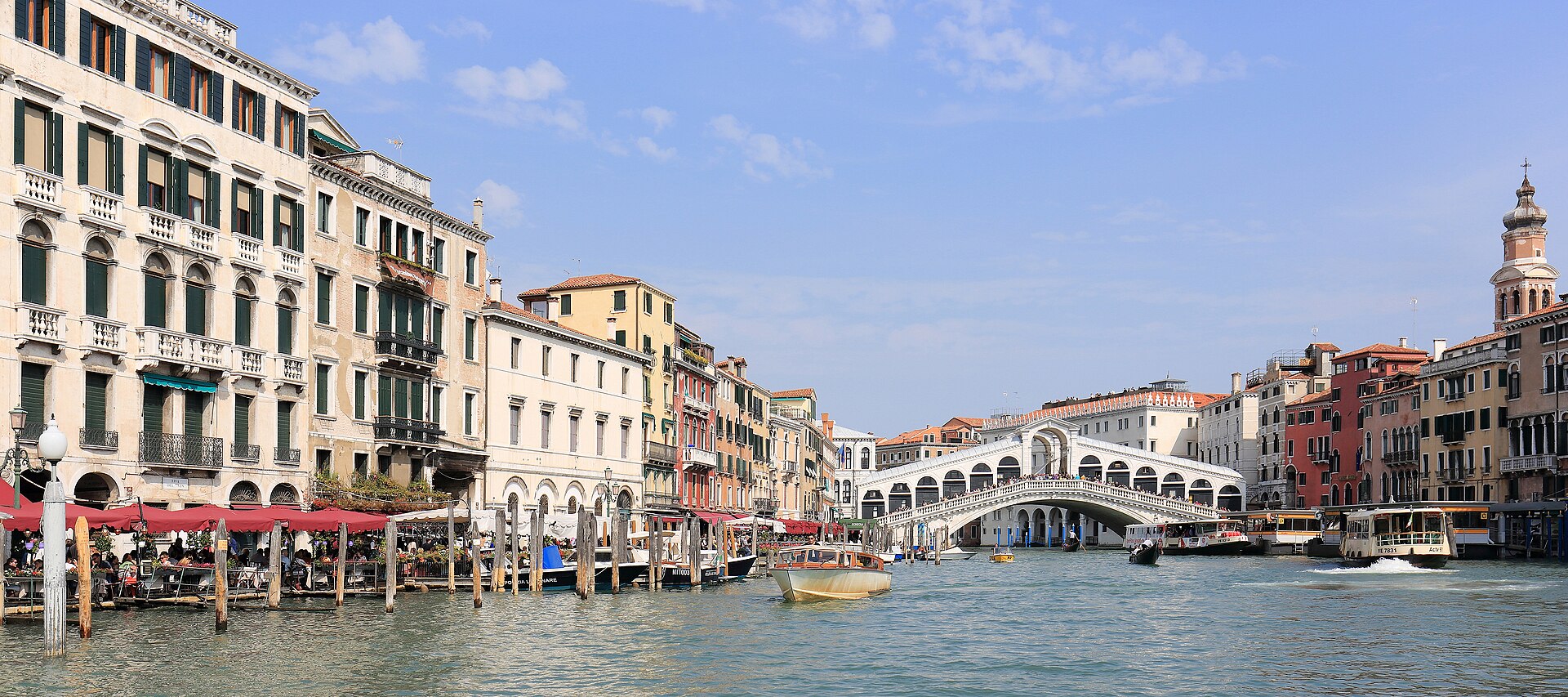
The logical sequence follows Milano Centrale–Venezia Santa Lucia–Rialto–St Mark’s Square. Use the first block for the stop most sensitive to crowds, then devote midday to the Grand Canal, Rialto, St Mark’s Square and one quieter neighbourhood. Add a seated break before the final transfer.
Do not judge a route by attraction count. Two coherent stops leave room to observe, eat and orient yourself; four often become queues, photographs and searches for the next platform.
- Morning: main transfer and first priority.
- Lunch: efficient, but not skipped.
- Afternoon: one secondary area and buffered return.
What to cut after a delay
Remove the stop that requires an out-and-back detour first. Preserve the experience that justifies the day and the most reliable connection towards Milan.
Do not recover time by running through lanes, piers or platforms. Update the route once, tell companions the new return and restore a sustainable pace.
Prices, tickets and inclusions
Venice rail fares change with demand and booking date. Check Trenitalia directly; a 15-hour bus tour rarely improves usable sightseeing time. These are “from” prices observed in partner catalogues, not guaranteed official rates. Date, language, availability and cancellation terms can change the total.
Open the product page and verify duration, meeting point, group size and exact segments. If listings look identical, compare departure and independent minutes; they explain practical quality better than price.
- Identify the operating company.
- Read weather clauses.
- Keep confirmation and support details.
When to reserve
Book dynamic-fare trains, panoramic carriages, small groups and timed admission early. Buy frequent or weather-dependent services later when they are not essential.
Check local time and late-arrival policy. A digital ticket may still require early arrival, identification or voucher exchange.
What to pack
Carry one light layer beyond Milan, tested shoes, a power bank and refillable water. For Venice (Venezia), keep baggage compact: stairs, piers, train aisles and crowded lanes punish a heavy pack.
Download maps and documents before leaving. Separate phone and payment card, and carry original identification for border crossings or carrier checks.
- Sun protection even in spring.
- A compact waterproof layer.
- Personal medication and modest cash.
Food and breaks
Place meals around transfers. Eat before a long segment or after timed admission; searching at the busiest moment removes useful time without guaranteeing better food.
If lunch matters, remove one stop. If sightseeing matters more, carry a snack and schedule a calmer afternoon break.
Prepare during the previous 24 hours
The evening before travel, open every confirmation and verify names, date, operating language and participant count. Look for direct messages from the operator, because a meeting point may move while the product title remains unchanged. Download documents instead of leaving them available only inside an app.
Create one note containing departure, street address, support number, first fallback and the time after which you will abandon a stop. Share it with everyone travelling; a common reference prevents debate while a connection approaches.
- Charge both phone and power bank.
- Check the required original documents.
- Pack water, waterproof layer and medication.
- Set an alarm with a deliberate buffer.
Checks on the morning itself
Before leaving, verify the first service and current conditions around Venice (Venezia). Check the final return as well as the outbound leg. If a critical connection is already cancelled, redesign the route at the hotel instead of improvising on a crowded platform.
Eat before departure when the opening segment is long. Carry only what you will use: lighter baggage makes security, changes and walking sections noticeably easier.
Navigate efficiently after arrival
As soon as you arrive, identify the exact point you will use to leave. Check the display or pier and save a readable photograph of current times; doing this now prevents a stressful search at the end. Then follow Milano Centrale–Venezia Santa Lucia–Rialto–St Mark’s Square without adding untested last-minute detours.
Cluster visits by area and finish each stop beside the next transfer. For the Grand Canal, Rialto, St Mark’s Square and one quieter neighbourhood, choose a continuous line instead of repeated backtracking. When a queue exceeds its allocated time, reconsider the actual benefit before remaining.
- Agree one unmistakable meeting point.
- Step away from platforms before checking phones.
- Respect residential streets and local instructions.
Photography, shopping and pace
Take essential photographs near the start of a stop, then put the phone away and read the place directly. Delay souvenirs and non-essential shopping until the end, when you know the remaining margin.
Alternate standing sections with short seated breaks. A sustainable pace produces better return decisions and leaves enough attention for an unexpected platform or itinerary change.
Keep one unscheduled ten-minute window before departure. Use it for water, a restroom or simple orientation rather than another attraction; this small reserve makes the final connection calmer and protects the parts of the day that already went well.
Weather, season and Plan B
Check high-water notices, major events and the local calendar. Check visibility, wind and rain at the destination, not only Milan. Grey weather can suit museums and old towns, while strong wind may alter boats or exposed scenic sections.
On weekends, move your ideal plan one departure earlier. In low season verify reduced hours and frequency; in peak months reserve scarce capacity but leave part of the route adaptable.
- Plan A for favourable conditions.
- Plan B with fewer moving parts.
- A clear threshold for postponing.
Access, families and return
Assess gradients, cobbles, stairs and distances between stops. State exact needs before payment and request written confirmation: an “accessible” label may cover only part of a route.
With children, cut the stop count; with limited mobility, favour one reachable highlight. Save a second return and do not wait for a nearly empty battery before locating the platform.
Frequently asked questions
How do you reach Venice (Venezia) from Milan?
Use direct Frecciarossa, then walking or vaporetto. Check official schedules for your exact date.
How long does the day trip take?
Allow 12–14 hours, including transfers and buffers.
Should I book in advance?
Quick answer: Yes, reserve trains. Reserve anything capacity-limited first.
How much does the trip cost?
Train, dynamic fare. Partner figures are “from” prices and need reconfirmation.
Is a tour better than DIY?
DIY favours autonomy; a tour simplifies routes involving several modes.
What can I see in one day?
Focus on the Grand Canal, Rialto, St Mark’s Square and one quieter neighbourhood, cutting stops if delays build.
What is the best time to go?
Check high-water notices, major events and the local calendar.